BDFI Press Release

The Countdown series for 2020 has not been possible to maintain due to the Corona Virus Pandemic. All Countries in our global network have had varying degrees of difficulty to promote and produce their events.

It is because of this that the series has been suspended until further notice.

The BDFI are very sad to give you this news, but be assured the series will again be active as and when the circumstances allows.

Stay safe! Stay healthy!

BDFI Executive Committee

WDC Disclaimer Form

To our Members,

For those of you who are registered with the World Dance Council (WDC) as competitors or adjudicators, you might have recently received a Disclaimer Form sent to you from the WDC.  This might have also been accompanied by a Letter of Explanation.

It is highly unusual for documents to be sent directly from the WDC to its registered competitors/officials (registrants).  Registrants are not members of the WDC – only national governing bodies are members of the WDC, for example the British Dance Council in the case of Great Britain.  In the past all correspondence between the WDC and individuals had to be routed via the relevant national governing body.  This was often insisted upon by the WDC as well as the member body.

There are various reasons for the requirement for correspondence to be routed via the member body and there are, of course, advantages and disadvantages to this system, as opposed to direct communication.  However, one of the most important advantages is representation; for example, where an individual is concerned about something that is, perhaps, unethical or against some rules, the individual can report this to their governing body, which takes up the matter with the WDC rather than the individual themselves.

In the case of the Disclaimer Form that the WDC is requesting its registrants to sign, there are questions that arise and some of these are of a very serious nature.  It is the view of the International Council of Directors (ICD) of the BDFI that individuals should request that such documents are sent to them via their national governing body and not directly.  Alternatively, individuals could contact their governing body to request its advice before signing the Disclaimer.

By so doing, the national body could advise its members whether or not it recommends the signing of the Disclaimer.  The national body would also be in a better position to seek legal advice before advising its members, if considered appropriate.

Yours sincerely,

The ICD of the BDFI

Press Release

Soon after its inception in 1998 the Ballroom Dancers’ Federation International applied for and was accepted as an Affiliate Member of the World Dance Council.  The Terms of Affiliation were agreed between the two parties and were on the basis that the BDFI retained its status as an independent organisation.

The relationship has endured for some 20 years during which time delegates from the BDFI would attend meetings of the WDC’s Executive Board, Competitive Dance Committee and AGM each time they were held.  As well as reporting back to the International Council of Directors and members of the BDFI as a whole, this allowed the BDFI to have an input on all matters debated and decided by the WDC.

The BDFI also actively encouraged its members to become registered with the WDC as adjudicators or competitors if they were not already and was instrumental in assisting various Professionals to obtain WDC Adjudicating Licences when they were having difficulties doing so.

For reasons that are unclear to the BDFI, the WDC recently decided to change the Terms of Affiliation of the BDFI’s membership.  The revised terms included items that the Directors of the BDFI believe would seriously limit its ability to remain independent.  Various negotiations took place in order to find a compromise that would be acceptable to both parties.  However, it proved impossible to satisfy the requirements of the WDC and retain independence for the BDFI.

The Directors and the members of the BDFI believe that its independent status is fundamental to its existence.  It is therefore with regret that the BDFI’s Affiliate Membership of the WDC has come to an end.

Existing members may be assured that the International and National Directors will continue to support the membership worldwide and to uphold the professional standards which have always been the Federation’s objective. All BDFI events and Competitive sponsorships will continue as usual, when the COVID-19 restrictions are lifted.

UK Congress 2020

Ballroom Dancers’ Federation International proudly present The 24th UK Congress (By kind permission of Dance News Ltd.) On Monday 20th January 2020 in the Tregonwell Hall, Bournemouth International Centre, Bournemouth

Doors Open 3.00pm

Featuring Lectures commencing at 4.00pm: Marat Gimaev in Ballroom and Slavik Kryklyvyy, Karina Smirnoff & Justinus Duknauskas in Latin

… and also featuring an audience with Len Goodman.

Len Goodman


Winners of the BDFI Countdown in cooperation with ChrisAnne Clover will be presented.


Congress Comperes: David Sycamore and Nicola Nordin

Free admission for all. On-line ticket requests can be collected on the door

Ticket request

1 + 5 =

UK Congress 2019

Ballroom Dancers’ Federation International proudly present The 23rd UK Congress (By kind permission of Dance News Ltd.) On Monday 14th January 2019 in the Tregonwell Hall, Bournemouth International Centre, Bournemouth

Doors Open 3.00pm

Featuring Lectures commencing at 4.00pm: Victor Nikovski and Arunas Bizokas & Katusha Demidova

… and also featuring an audience with Richard Gleave OBE & Janet Gleave.


Winners of the BDFI Countdown in cooperation with ChrisAnne Clover will be presented.


Congress Comperes: David Sycamore and Nicola Nordin

Free admission for all. On-line ticket requests can be collected on the door

Ticket request

6 + 8 =

EMBASSY/BDFI congress 2018


Hazel Fletcher

Text by Hazel Fletcher

By kind permission of the McDonald family the Embassy BDFI congress has been held annually during the Embassy festival for many years. The congress took place on the 2nd day of the 5-day dance festival and was enthusiastically received.
First on were;

NICK CHEREMUKHIN & VIKTORIJA – AMERICAN SMOOTH

Nick and Viktorija’s partnership formed in March of 2013. Within their first year Nick and Viktorija became finalists in all major competitions in the United States. They have a strong Ballroom and Latin background, as well as modern jazz ballet and contemporary dancing. This they believe has been a huge contribution to their success.

Nick and Viktorija’s latest accomplishments are:
Three times Open Professional Smooth National Champions, Twice Open British Blackpool Smooth Champions and 3 times World Open Professional Smooth Champions.

Closed position vs Shadow position

They explained that they believe the “Rise and Fall,” Swing and Footwork are mainly the same in both positions but with a few minor differences. What is important is the retention of a common centre on the right side in normal Closed hold and in Shadow, whilst maintaining the same frame for the man constantly. Nick stated that his elbow line should not change when the Lady turns to Shadow, the only small difference is from the wrist. Viktoria explained the differences of her shaping of the head and upper body which has to change.

They then suggested detail in the transitions between Close Shadow, more Open Shadow, switching from Closed to Shadow position and back. They emphasised that in Open Closed hold how important it is to maintain the centre and palm for the man the same distance apart. They explained the 2 pendulums when switching from right Shadow to left Shadow, with Nick always maintaining an excellent frame. “I lead the girl first and then I follow” stated Nick so it is not always about the man leading and the lady following!

The summary was that there are more similarities in both positions than differences.

I found this an interesting lecture highlighting how imperative it is to use International Ballroom principles constantly maintained to promote the beauty, character and fluidity to enhance the title of the style = Smooth.

RUFUS DUSTIN

American rhythm

BDFI Congress at the Embassy

Rufus’ resume includes being a 2-time World Exhibition/Cabaret Champion, 2-time United States National Professional American Style Champion both in Rhythm and Smooth, North American Latin Champion, North American 10- Dance Champion, United States Champion and British Open Blackpool Dance Festival Exhibition Champion. He had 5 partners and will be remembered most for his success with Sharon Savoy and Marianne Nicole. His roots lie in ballet, before continuing into Dance sport, winning his first American Style DanceSport Championship in 1974.

His lecture was entitled “MAMBO OUR ROOTS” four legs. This mirrors my personal history in the same year!

When asked what took him away from ballet, Rufus revealed he was drawn to the magic of Ballroom Dancing. While ballet is self-focused, Ballroom Dancing requires its partners to move as one body with

Rufus retired from competing when he was 42 years old. He currently resides in Miami, Florida. He coaches Professional competing couples and occasionally high- end Amateur and Pro-Am couples and adjudicates all over the world. Rufus is a multi-time Lecturer at the World Ballroom Dancing Congress in Blackpool, England.

Firstly, Rufus gave a history lesson in where the Mambo developed from. Machito came to New York from Cuba in the 1930’s and changed the face of music, he was a conga drum player. In 1937 he had a band called the Afro Cubans. The music sounded very primitive. The style of music fused jazz with the Cuban music of the time. The original Mambo music was faster. Modern times has slowed down the tempo. Rufus explained that the original Mambo style and tempo cannot be danced in competition today because it is too socially orientated.

Mambo has several basic rhythms.

The forward half basic with only pressure on the front foot but not full weight defines the typical Mambo delayed weight change. The next version is the same for 2 and 3 but has an earlier straightening of the knee on 4. Then there is Double Mambo where a step is taken on every beat, and the opposite which is half time Mambo where 2 beats are given to each step. Cross body lead is very popular. Rufus explained in detail that the lady should be offset and not square in front of the man. After the back break for Lady the man leads the lady to step across on Her Left foot Forward swivelling from the standing foot rotational quality combined with incredible smoothness, shade and light, level changes and the use of isolation.

He closed his lecture with a Mambo demonstration by the current USA and World rhythm Champions Nazarov Norov & Irina Kudryashova.

MARAT GIMAEV & ALINA BASYUK

followed with their lecture on International Ballroom.

Marat and Alina both started dancing in 1980, Alina in her hometown of St. Petersburg in Russia and Marat in Moscow, where in 1999 they began dancing together. As Amateurs they became a total of 9 times Russian Champions in Ballroom and 10 Dance, 3 times World 10 Dance Champions, and after switching to competing exclusively in the Ballroom style, made multiple Grand Finals of Worlds, Blackpool, United Kingdom and International Championships. In 2011 they moved to America to compete as Professionals – in pursuit of a high competitive environment and started representing the United States. Domestically they became 5 times US National Professional Ballroom Bronze medallists. Internationally they became Worlds, Blackpool, United Kingdom and International Professional Ballroom Grand Finalists. They retired as competitors at the British Open Championships in Blackpool at 2017. They reside and teach in New York and also perform demonstrations and adjudicate as National and World Class Judges.

MUSIC MATTERS

Marat commenced with the statement “We react to music on a subconscious level.”
He stated that there are 3 major departments when it comes to musicality = The structure of music. The simple understanding of phrasing. And hearing the “Question and Answer” in the music.

When he demonstrated Foxtrot I found it most commendable to hear Marat say “Quicks and Slows” and not numbers. This then produced a more musical and lyrical definition.

He said the dancer needs big ears to produce musical movement. He demonstrated the use of ankles and feet, legs and knees to truly use the music. Emotion makes the quality of dimension musical. Another illustration was dancing simple Waltz counting 123, then adding &1&2&3. Then &a1a&a2a&a3a&a etc. Now the audience could witness fuller musical nuances continuously. The defining factor for the movement is to become motion and musical. Movement must never stop, always continue to flow.
His summary was “We don’t dance to music, we become the music!”
This was a most charming lecture full of tips for even dancers who may not be naturally musical but how to develop that aspect.

The final lecture on International Latin was presented by Alan Fletcher.

Alan’s credits include being 5 times former Professional World and European Latin Champion.

THE DANCERS CONUNDRUM

Alan commenced by defining the word Conundrum, which means problem, dilemma or puzzlement. He then explained that he believes many dancers have confusion as to what should be their best personal direction. Time has developed into the seeking of advice from the many experts our business has to offer whilst in years gone by the dancers tended to have far fewer opinions and direction tended to be clearer. The consensus of opinions should then be more adhered to as the way forward and guide to development. When unsure couples tend to follow fashion and become at times lost within the masses thereby losing personal identity.

Alan stated that 4 main words need to be understood relative to clarifying intension = Look or Feel, Quality or Quantity. Relating the words Look or Feel, couples in general want the overriding aspect of “Feel” to be more to the forefront as internal emotion does obviously relate to dance. Feeling without substance can appear often unreal. The Look being the presentation of ones physique is the priority, like it or not, the visual appearance is what a judge would acknowledge more.

Quality is the connection of all components that make up integral and external actions. Quantity can be over packaging of choreography, many times based upon fashionable steps and actions that to the onlooker can appear too similar and overly congested and no allowance for subtleties, impact being the priority. Dance characteristics can be lost.

To demonstrate his points Alan introduced Massimo Arcolin and Laura.
First in Rumba the understanding of spine, core, shoulder and hip alignment and horizontal rotation. Especially for Ladies the shoulder blade to heel connection and diagonal stretch, plus heel usage in contact with the floor through rotation. Elbows and hands pulled back to enhance the understanding of correct posture; the connection of arms and hands to one’s personal centre. The resistance allowing for gravitational release can allow for muscular freedom to enhance musical activation. Interplay creates the required atmospherics plus the use of accents to develop energised changes of energy.

Alan then related the required elements necessary for Paso Doble = Timing, Posture, Framing, Shaping and Resistance plus Passion, and the extreme importance of head position to adhere to character.
His final thought-provoking line = Somebody once said, “Simplicity is Genius.”


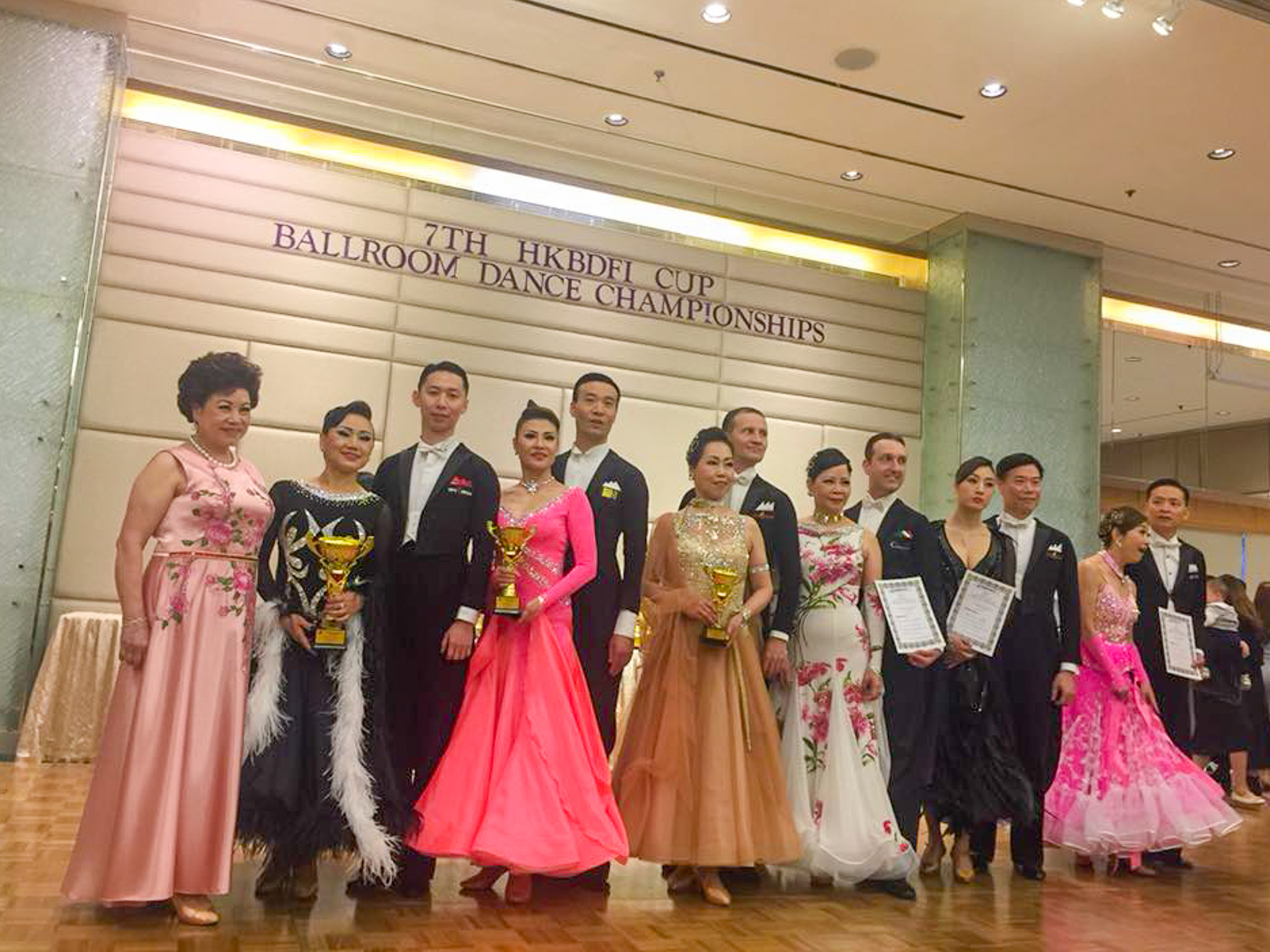
7th HKBDFI Cup

The HKBDFI Cup organized by HKBDI was supposed to be held in February or March at Hotel Regal Riverside (“HRR”). This year it was fixed on 1st April (Easter Sunday) due to HRR fully booked (similar situations as last year) ! The number of dance competitions or parties are flourishing in Hong Kong in recent years. The popular venue for dance events like HRR is difficult to secure. I had had the mental preparations of less participants at 7th HKBDFI Cup on April Fool’s Day 2018 as a lot of HK people go out for Easter Holidays! Beyond my expectations, the comparison statistics was not that bad :

6th HKBDFI Cup on 9/4/17 83 Couples 99 Solo dancers 19 tables
7th HKBDFI Cup on 1/4/18 81 Couples 96 Solo dancers 18tables

The top four events were more spectacular than last year : – Open Professional Standard & Open Amateur Standard were taken by two highly skillful Italian couples Gaetano & Emanuela, Daniele & Nicole ; Open Professional Latin Champions were from South Africa Ryno & Mira. They showed their appreciations to HKBDI (who helped them entered for this year’s Blackpool Dance Festival) by dancing at 7th HKBDFI Cup , their first competition after over one year’s break. The audience enjoyed their passions & total dedications in their first time competition in HK;a partnership of HK/China youngster Power & Mimi was crowned Open Amateur Latin Champions . They were blessed with talent & chance – they won two consecutive HKBDI Ranking events on 10/12/17 & 1/4/18, coincidently Denys & Yuliya (England) and Federica & Federico (Italy) both withdrew from both events at the last moment.
When “Hong Kong Permanent Resident Amateur Standard” (“HKPRAS”) event was first introduced by HKBDI at 1st HKBDFI Cup six years ago, all participating couples were Senior couples. This year this meaningful event was won by a brand new vibrant partnership Dovano, aged 18 & Victoria, aged 15. Actually Dovano with ex-partner Tracy was 2017 All Year Round Champions of HKPRAS. I am happy this event has become the landmark of HKBDI and more HK young & upcoming couples are supporting HKBDI.
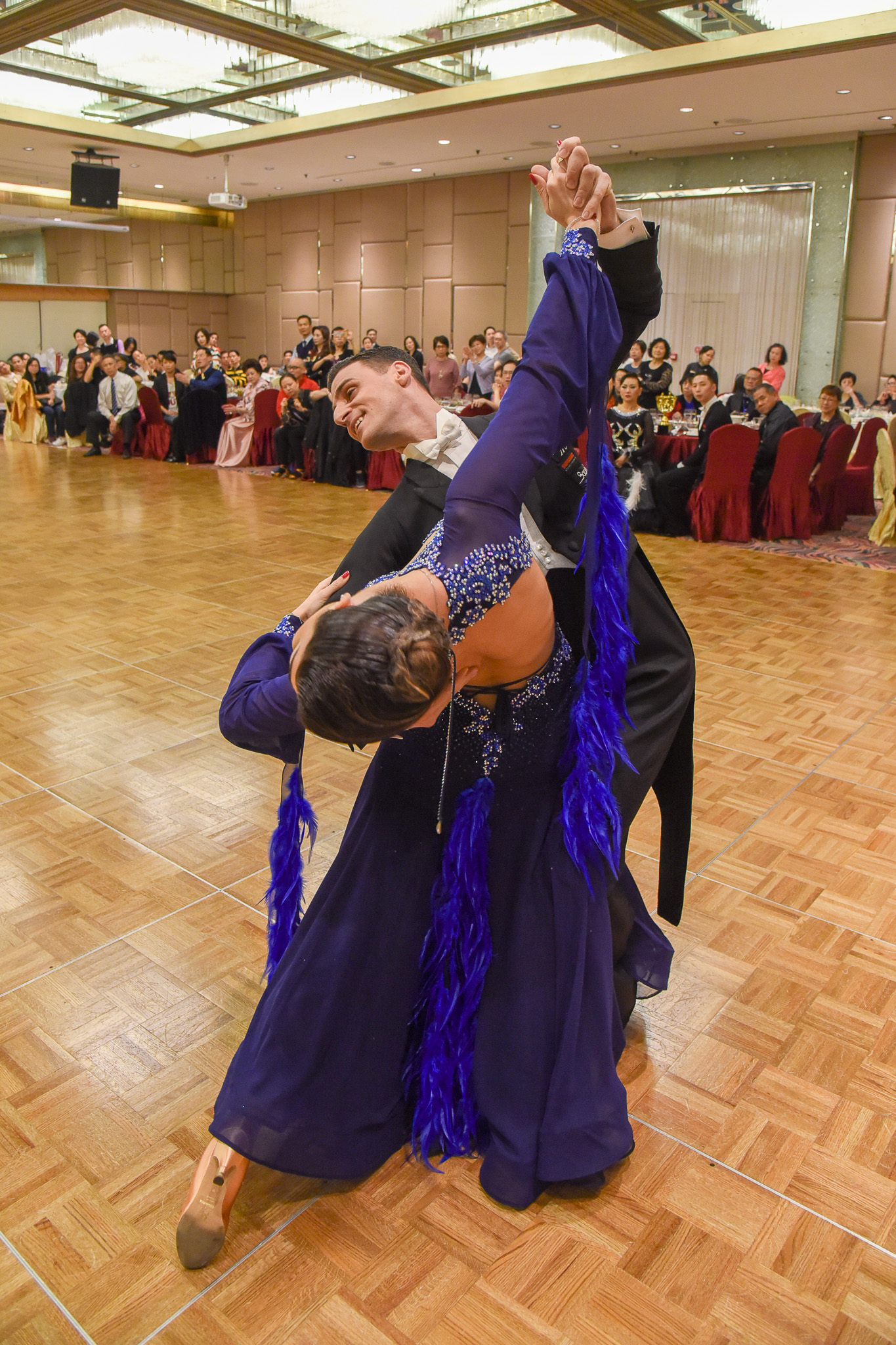
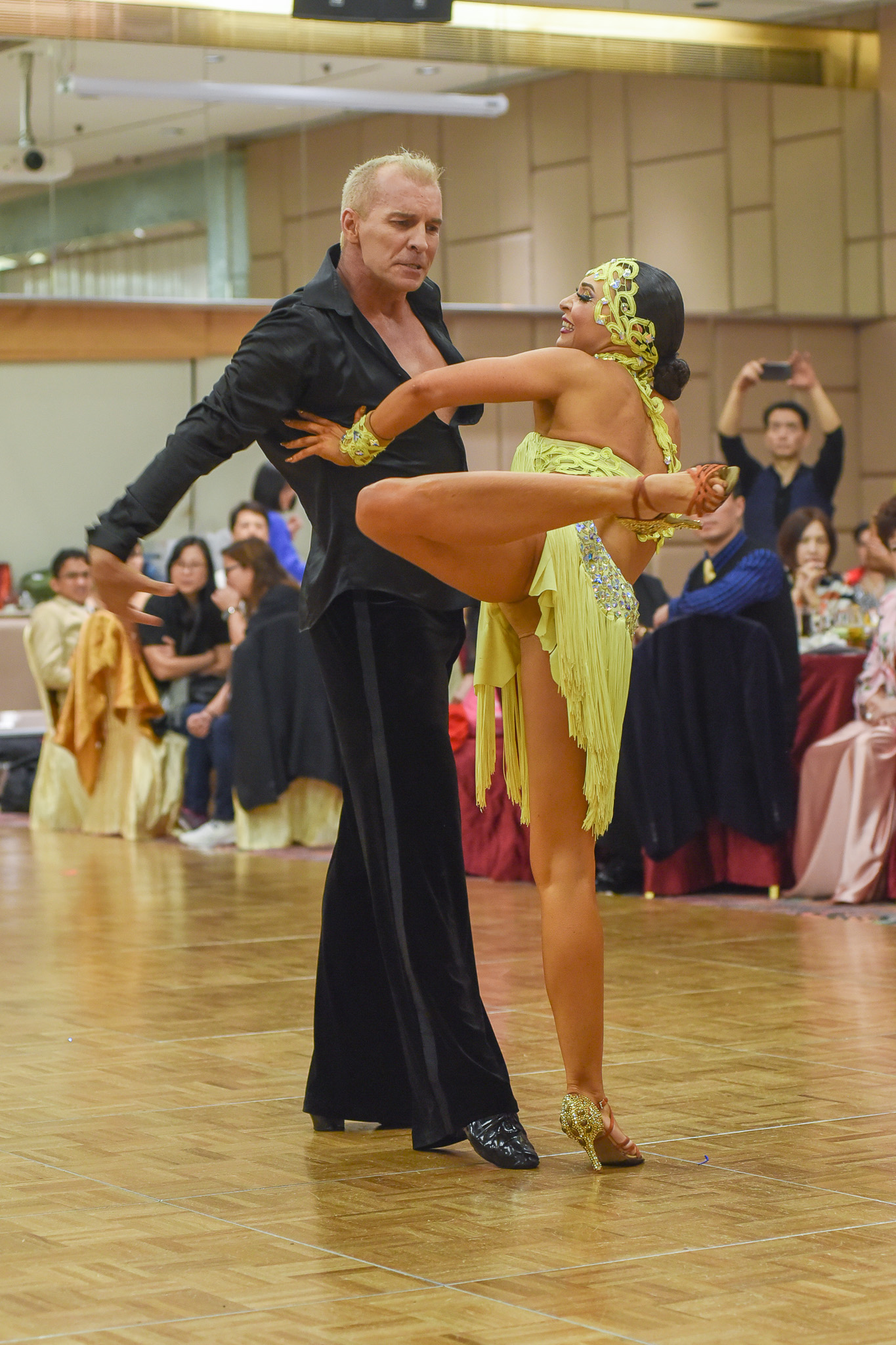
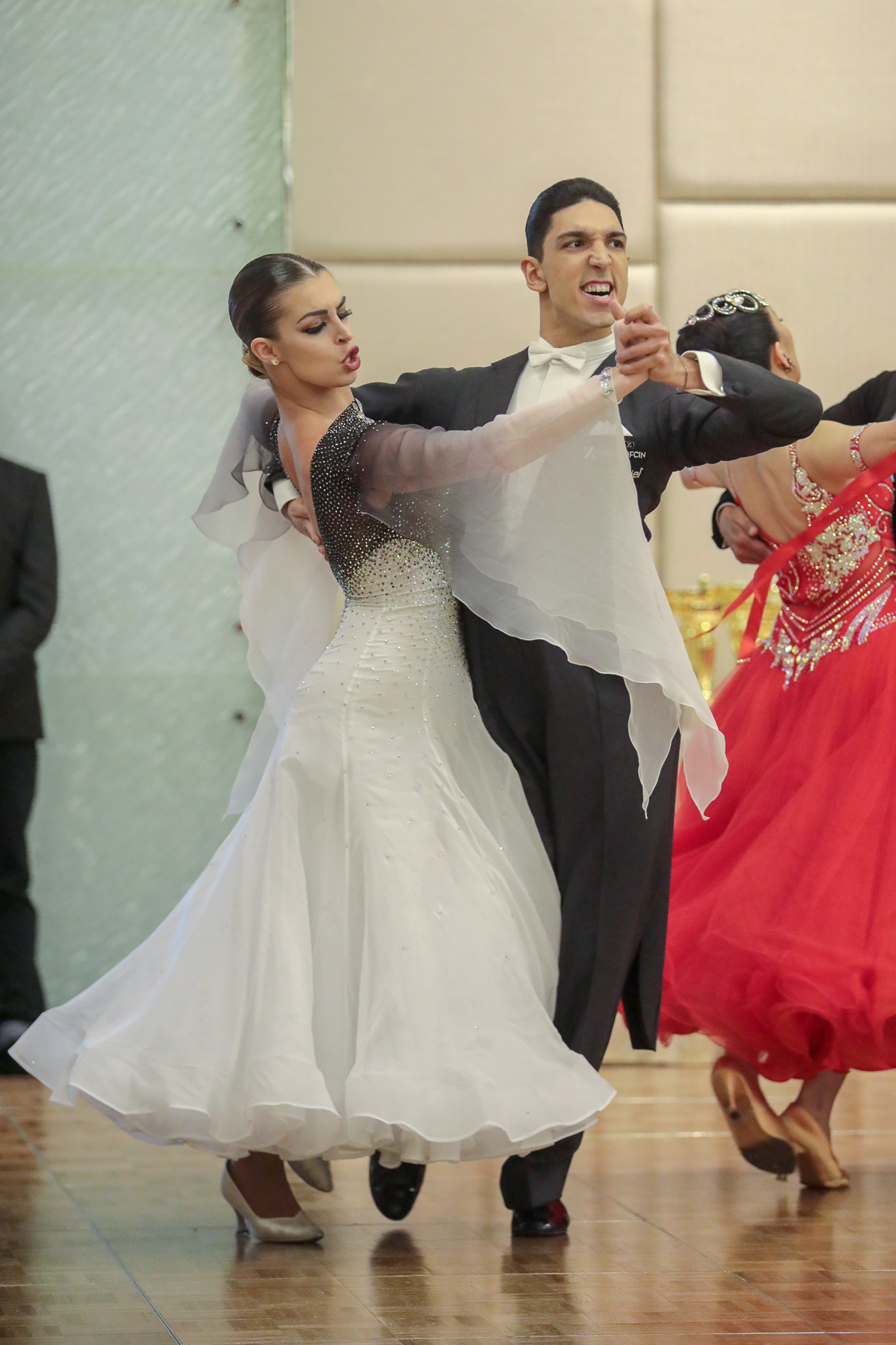
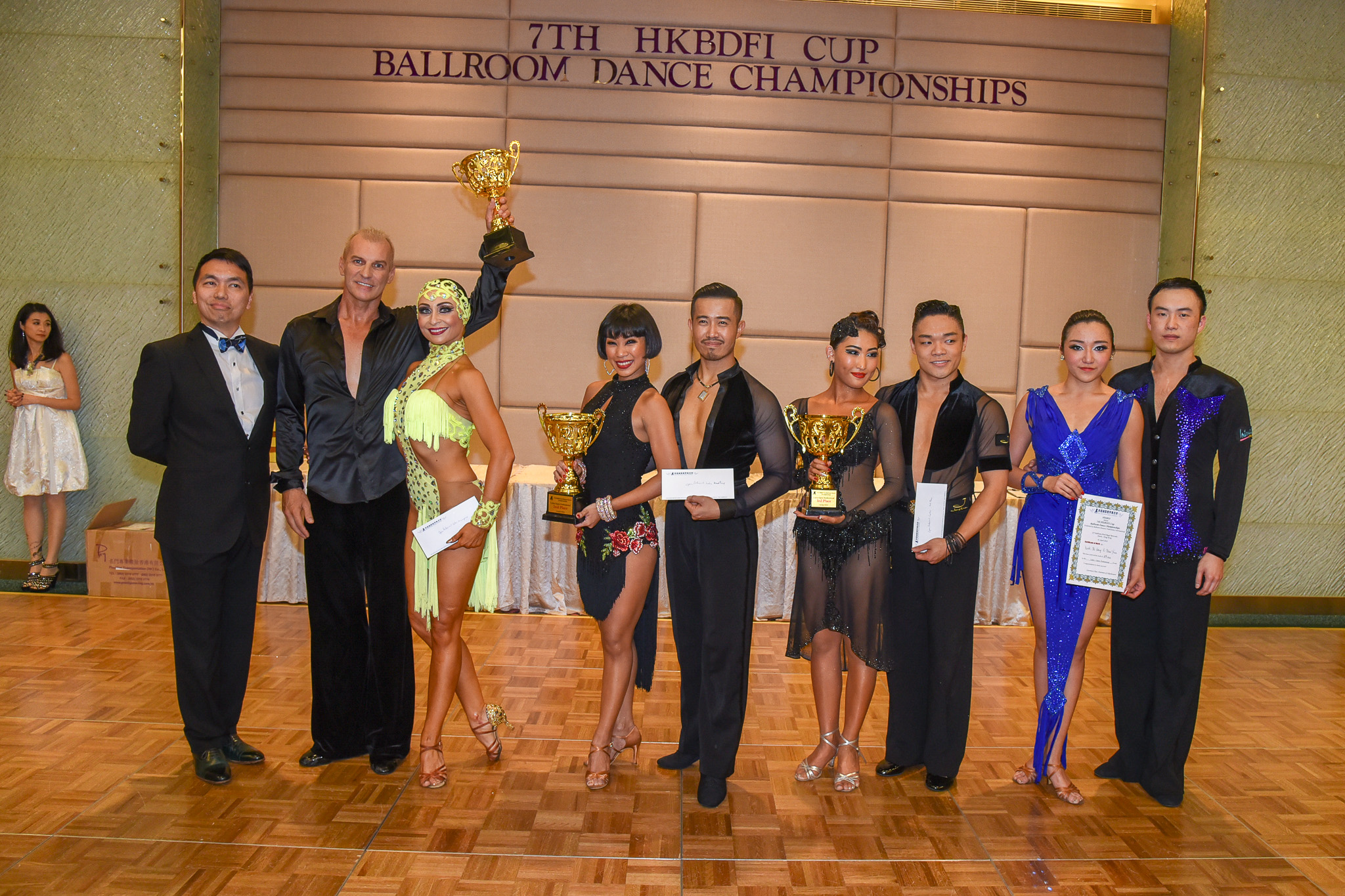
Photos : (a) Open Professional Standard Champions Gaetano Iavarone & Emanuela Napolitano (Italy) ; (b) Open Professional Latin Champions Ryno Van Den Berg & Mira Tokarenko (South Africa) ; (c) Open Amateur Standard Champions Daniele Ruscito & Nicole Cartigiano (Italy) ; (d) prize presentations of Open Professional Latin ; (e) prize presentations of Pro-Am 5-Dance Standard

Lawrence Chan
President , HKBDI


Embassy BDFI Congress – 2017

EMBASSY BDFI congress 2017

by Hazel Fletcher

US Congress 2017

The BDFI congress is presented at the Embassy annually with kind permission of Brian MacDonald and family. The lecturers engaged are always judges attending the event. This year there were 3 lectures in American Rhythm, International Latin and then Ballroom.

Forrest Vance

Greg Smith, the BDFI Chairman, introduced the first lecture for American Rhythm by 5 times American Rhythm Champion Forrest Vance. Forrest began his dance career in 1979. He is now a studio owner, travelling adjudicator, consultant choreographer and coach as well as being a competition organiser. Among his credits are 15 times USA Ballroom Championship top teacher and producer of “Not Strictly Ballroom” dance videos. In 2010 he received the the Ford/Hanlon award, in 2011 the Dancesport series Top teacher and in 2012 he entered the Professional “Hall of Fame.”

Power was his subject. The biggest power, which he named the “IT” factor, is staying true to yourself. He stressed that power begins from understanding the role of the feet and legs, so true and also relative to International Ballroom and Latin. Forrest calls his feet his “little thrusters” and then went on to explain. He encouraged some of the audience to partake, originally for foot exercises. He said all dancers need to know how and why they use their feet to Dance any particular movement. He demonstrated how to place the feet and legs that they never appear ugly. He gave examples in Check lines, Press lines and a Walk. He stated that unfortunately he witnesses too many ugly positions during competitive events in Rhythm style.

American Style

In American style the best way is to project weight forward or sideways and then catch weight on the free foot, not moving the free leg outside the body. He showed this by advancing the lower body forward. An example was shown demonstrating the “Box step” – fall to the side into a side lunge, then the leg that is free the hip should be elevated. The same going forward. If the hip is elevated there should be no balance problems.

He showed the preparation of lining up the deportment, then clenching buttock muscle, pulling back the navel to the spine, followed by dropping the shoulder blades and then leaving the head back in line. Forrest explained that then the man shapes the frame and the lady should contour herself and settle to the mans frame. This set up lesson I abide by 100% and give every day, so the American Rhythm style from this aspect is no different at this stage to International Latin.

He believes that speed and power cannot be gained without first understanding the priorities of how to set up and how to move from foot to foot.
He demonstrated the difference between a Back Rock and a Back Break relating to weight distribution and foot placement.
Forrest’s final and most important reminder is that “Technique is mandatory.”

Nadia Eftedal

Next on was Nadia Eftedal. Her competitive career is most impressive including Open British Professional Latin Champion, U.K. Professional Latin Champion, Twice European Latin Champion, U.S. Open Professional Latin Champion, and Five times vice World Professional Latin Champion. During her career, Nadia has travelled extensively performing demonstrations, conducting lectures, and teaching trips throughout Asia, Europe, Australia and the USA. 
In May, 2005, Nadia was selected as the American representative to judge the prestigious Open British Championships, held in Blackpool, England which was the highlight of her adjudicating career.

“If you do what you have always done, you will get what you have always have gotten” was a thought provoking opening statement. Nadia talked about the idea of having fun, what is play? Play is enjoyable, we do it for its own sake. Nobody is making you do it, it is voluntary, and it makes you feel good. When we are playing we lose all sense of time so we lose constrictions and feel free, we are ready to break the rules and improvise.

When you are playing you are having fun and do not want it to stop.
Nadia believes many dancers are too serious and intense whilst competing and it does not bring out the best in them. They are not allowing themselves to show that they are having fun and truly enjoying dancing.
She then explained how self imposed stress makes up a large part of the demons against successful competition result. “How do you respond to nerves within dance competition?” She suggested turning a stressful situation into play. She gave some exercises with the toes and making sounds to release tension, shake it out and practice smiling.
We have rules of how to use all anatomical aspects. We should question what are the rules, how can we use those rules, are there exceptions to the rules? Rules give us stress, play brings us back into the moment. Anticipation, surprise, pleasure and understanding all promote strength.
As examples of former Champions who excelled in showing the enjoyment that “Play is dance” and breaking expectations Nadia had assembled a power point presentation video of John Wood and Anne Lewis’ Quickstep Showdance from 1987. Then an excerpt of Massimo Giorgiani and Alessia Manfredini winning the World Showdance that included falling over twice and stunning the audience as to whether that had been a mistake or a planned surprise. Next a clip of Michael Malitowski and Joanna Leunis playing with time in their famous “Un Dos Tres” Samba show. This was followed by playing with balance by 13 times former World Champion Bill Irvine MBE dancing a Foxtrot basic sequence with a cup and saucer on his head. The lesson here was “Finding fun ways to practice the principles!” Unfortunately with the loss of time due to technical issues with the power point presentation the audience never got to see the grand finale of the lecture which Nadia informed me was to be a video clip of her and partner Johann Eftedal simply showing how much fun they were having dancing their Cha Cha that won them the most prestigious title of British Professional Latin Champions. I suspect that it can probably be found on You Tube!

Victor & Anastasia

The final lecture was 2017 British Open Professional Ballroom Champions Victor Fung and Anastasia Murayeva. Victor was born in Los Angeles and started dancing at 9 years old. Anastasia was born in St Petersburg, Russia and started dancing at the tender age of 3. She moved to the USA in 2005 and partnered up with Victor in November 2009. They won both the International Professional Ballroom Championship and Blackpool China in 2016 and hold the position of vice Champions in all other major titles.

Their dance objective is to enlighten and move people through the “Art of Dance” – to touch peoples hearts by bringing them into our passionate World of Dance, lift their spirits and allow them to experience the joy, ecstasy and zeal of Dance.

Victor commenced the lecture by explaining that they wish to share their ideas of what is important to them, he stated “We know the stats, ”they find that gets them to a certain level. Then it is about “How we do what we are doing?” Posture, position, frame, arm positions and then go are not enough for Victor, he needs to be inspired. He learned from Bill Irvine how to find music that can inspire you. Dancing is communication, he stated “the ladies are wonderful inasmuch that they can do whatever the man wants!”

“The man needs to make his lady feel wonderful in his arms.” He suggested “Don’t set the commencing position the same every time!” Victor believes he does not need whole choreographies, just little snippets to enjoy.

“Time is important” so slower music inspires him more. They then performed in a few different ways, all looking good to me. Then he stated that he keeps asking himself “can I do better?” Then he asked Anastasia “How was that?”
The next very wise comment was “Every step, every movement must come from the floor.” “Guys cannot multi-task!” More time, means time to think and perform. All moments should always be turning and constantly stretching. Never running, just dancing and having fun.
“Holding balance is the mistake, rebalancing is the trick.”
“Beautiful articulation of closing the feet impeccably.”
They then danced a Tango to “Fever” by Beyoncé. Victor talked a lot whilst they danced and yet the control of his breathing was most admirable.
Victor stated “The magic is in the mix, staccato and then moments of legato and softness.” Their final dance for the audience who were totally absorbed with the many tips they gained as education and beautiful dancing to entertain them was a Foxtrot to “Always on my mind” which I noted at only about 18 BPM. Superb control and fluidity was the impressive finale.

My lasting impression from all 3 lecturers was that without all discussing their themes, one predominant theme ran through the whole afternoon. The priority is good dance performance at every level is about showing you are having fun!


UK Congress 2018

Ballroom Dancers’ Federation International proudly present The 22nd UK Congress (By kind permission of Dance News Ltd.) On Monday 15th January 2018 in the Tregonwell Hall, Bournemouth International Centre, Bournemouth

Doors Open 3.00pm

Featuring Lectures commencing at 4.00pm: Eugene Katsevman &  William Pino

20170526-IT6_6116

Eugene Katsevman


20170528-IT6_7395

William Pino


… and also featuring an audience with Michael Stylianos & Lorna Lee.

20170117-IT6_2622

Michael Stylianos & Lorna Lee


Winners of the BDFI Countdown in cooperation with ChrisAnne Clover will be presented.


Congress Comperes: David Sycamore and Nicola Nordin

Free admission for all. On-line ticket requests can be collected on the door

Ticket request

4 + 2 =

BDFI Countdown

BDFI COUNTDOWN in cooperation with Chrisanne Clover

The International Council of Directors of the BDFI is pleased to announce the introduction of the BDFI Countdown in cooperation with Chrisanne Clover.  This scheme is designed to encourage and benefit the Rising Stars of both Professional and Amateur competitors in Ballroom and Latin Championships and Competitions.  The top-rated couple in each section will be awarded a grant of £500 per couple.

Winners will be calculated based on the results of specified major events held throughout the calendar year and geographically spread worldwide.  As the scheme is aimed at Rising Stars, couples rated in the top 12 of each section will be excluded.  (The top 12 is quantified as those couples that have reached the semi-final of any one or more of the three major championships held in the United Kingdom each year, these being the U K, British and International Open Championships – in the case of the British Open it will apply to couples reaching the semi-final in all four/five dances).

For events which include a Rising Star Competition, these results will be used for the calculations.  For events where only an open competition is held, these results will be used but the results of couples within the top 12 will be excluded from the calculations.  Points will be awarded as follows:

Place Points
1 25
1 18
2 15
4 12
5 10
6 8

All semi-finalists 4 points

The winners of each category will be presented with their prizes during the U K Congress presented by the BDFI each January in Bournemouth, the first presentation being in 2018 based upon this year’s results.

The International Council of Directors of the BDFI wishes Good Luck to all Rising Stars Competitors.

The BDFI is grateful for the cooperation of Chrisanne Clover in making the BDFI Countdown possible.

The list of included events below are currently being updated.  

Competition Date Country
BDF Star Ball Jan-18 UK
UK Championships Jan-18 UK
NYDF Feb-18 USA
Open British Championships May-18 UK
Festivaldanza Cervia June-18 Italy
Open International Dance Championship  Sep-18 Philippines
Autumn Dance Classic Oct-18 USA
International Oct-18 UK
North American Imperial Star Ball  Nov-18 USA
Taiwan Open    Nov-18 Chinese Taipei
UKR Dance cup Nov-18 Ukraine
Moscow Dance Battle  Mar-19 Russia